Context and Scientific Challenge
Inappropriate surgical antimicrobial prophylaxis drives healthcare-associated antimicrobial resistance and avoidable costs. Multidisciplinary antimicrobial stewardship (AMS) programs aim to optimize drug choice, pre-incision timing, and post-operative duration.
Study Design and Methods
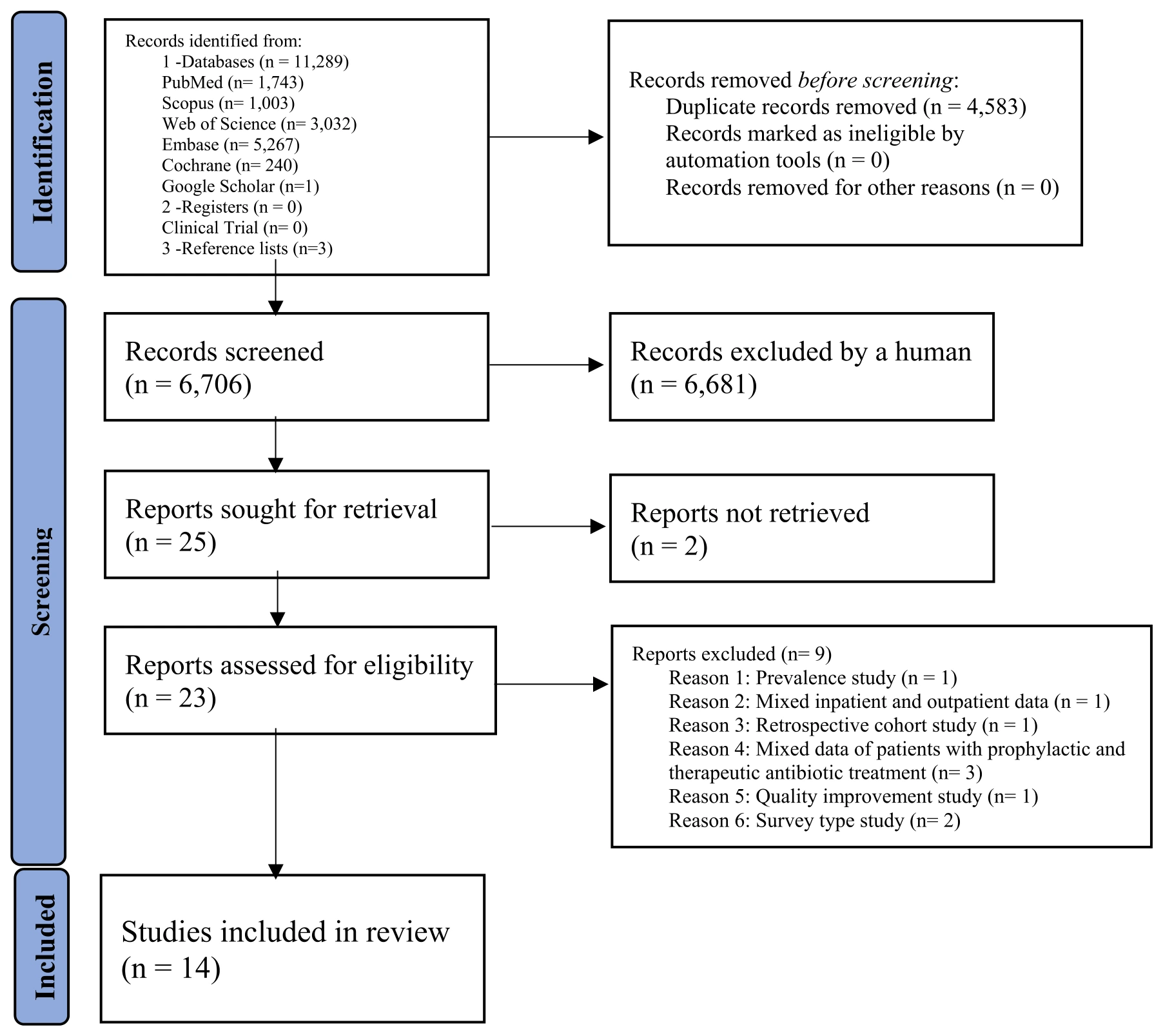
Systematic review guided by PRISMA and registered on PROSPERO (CRD42020160270). Seven electronic databases were screened without language restrictions. Independent paired screening (Kappa = 0.733), standardized data extraction, risk-of-bias evaluation with ROBINS-I, and GRADE certainty assessment were performed.
Key Findings and Evidence
- Improved guideline compliance: 12 out of 14 studies (85.7%) documented statistically significant improvements in surgical prophylaxis protocol adherence.
- Surgical site infection reduction: 4 studies (28.5%) reported significant reductions in SSI incidence, with zero studies observing infection increases.
- Favorable economic return: pharmacoeconomic evaluations reported benefit-cost ratios ranging from 11.3:1 to 27.23:1 favoring stewardship implementation.
- Methodological profile and bias: all 14 studies were non-randomized quasi-experimental designs, with 57% graded as moderate risk and 43% as serious risk of bias by ROBINS-I.
Regulatory Implications and Practical Impact
Provides coherent evidence that surgical antimicrobial stewardship interventions led by clinical pharmacists enhance patient safety and curb hospital expenditures, advocating for future interrupted time-series and multicenter designs.