/
Journal cover: Biologicals

Biologicals

2026 · v. 93

Immunobiologicals and 3Rs COAUTHOR

Diphtheria antitoxin potency assay: an in vitro alternative to the in vivo subcutaneous toxin neutralization test

Authors: Bacellar, D. T. L.; Silva, C. S.; Pereira-Júnior, A. A.; Moura, W. C.; Villas-Bôas, M. H. S.; Mattos-Guaraldi, A. L.
100% Vero Cells In Vivo Replacement
0.982 Correlation (r)
CV < 8.5% Inter-assay Precision
Acessar Artigo Original (DOI) ↗
Editorial note: This commented synthesis highlights the scientific aims, analytical methodology, and implications of the study for academic dissemination. The complete original publisher-formatted text is accessible via the official DOI link above.

Context and Scientific Challenge

Regulatory release of diphtheria antitoxin traditionally requires the in vivo subcutaneous toxin neutralization test in guinea pigs (TNT-SC), consuming many animals and causing severe distress. The goal was to validate a full in vitro replacement using Vero cell viability.

Study Design and Methods

Comparative validation across 12 antitoxin samples (S1–S12: 9 compliant ≥1000 IU/mL, 3 subpotent) tested in parallel via in vivo TNT-SC and in vitro 96-well Vero cell culture with neutral red uptake spectrophotometry (540 nm). Parameters included parallelism, specificity, intermediate precision, repeatability, and dilutional linearity.
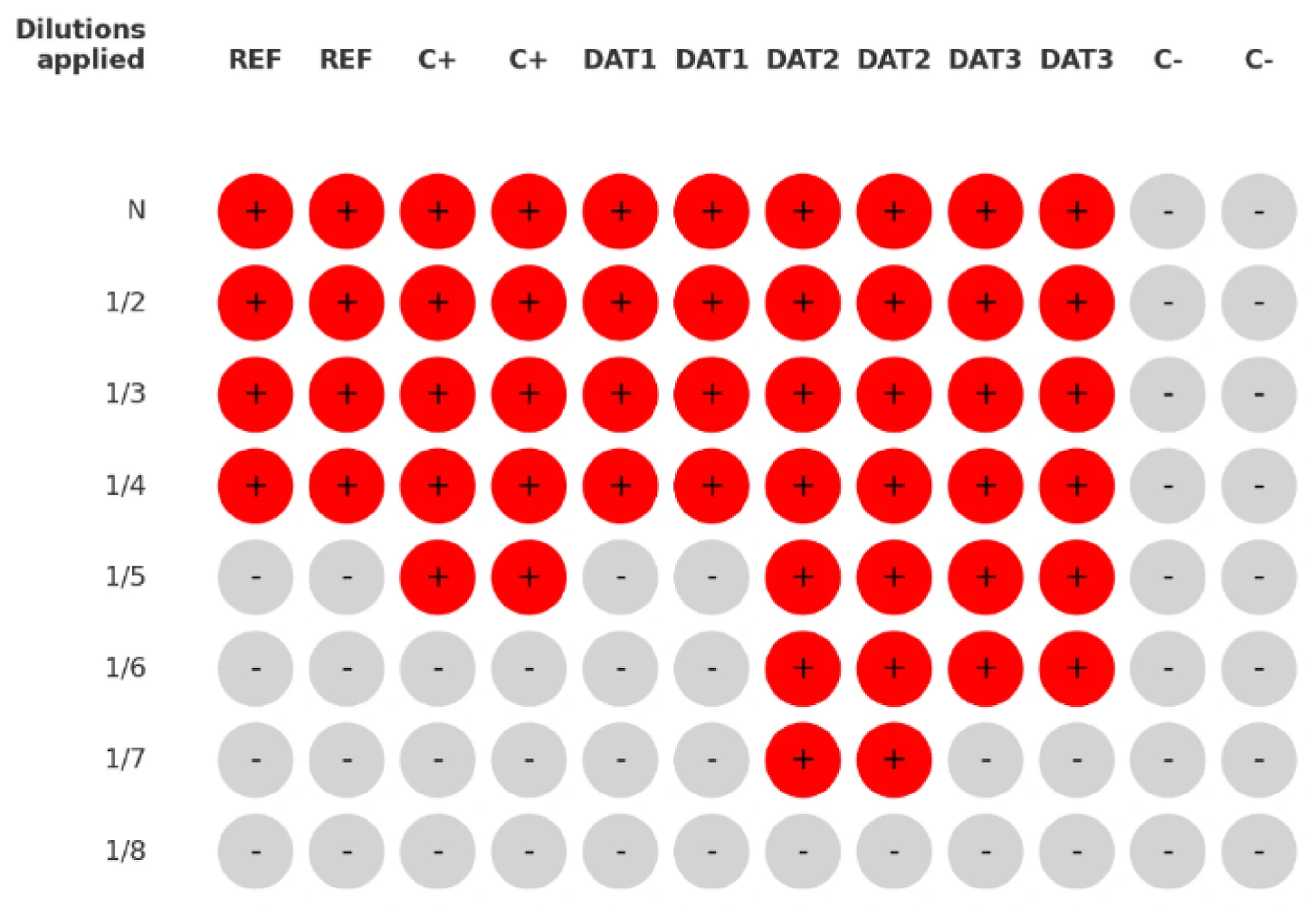
Standard 96-well plate layout for the Vero cell neutralization assay using neutral red viability readout.
Fig. 1: Standard 96-well plate layout for the Vero cell neutralization assay using neutral red viability readout.

Key Findings and Evidence

  • Strong agreement with the classical in vivo assay: Lin’s CCC = 0.95 and paired t-test showing no statistical difference (p = 0.164).
  • 100% diagnostic concordance: flawless discrimination between compliant (≥1000 IU/mL) and subpotent (<1000 IU/mL) batches across methods.
  • High dilutional linearity with R² = 0.999, slope of 1.074, and relative bias below 8% throughout the analytical range.
  • Strict analytical specificity: zero cross-reactivity with tetanus (TAT), Bothrops (BAV), and rabies (ERIG) immunoglobulins (< 250 IU/mL).

Regulatory Implications and Practical Impact

Demonstrates the technical and regulatory feasibility of direct animal replacement (3Rs) in diphtheria antitoxin batch control, providing a fast (72h), reproducible, and low-cost in vitro assay for public health control laboratories.

IN VITRO ALTERNATIVE METHOD

Linear Correlation: Vero Cell Assay vs. Subcutaneous Neutralization

Biologicals (2026) · Dados Publicados Reais

Ensaio in vitro em Células Vero vs Bioensaio in vivo (Antitoxina Diftérica)

3Rs: 100% de Substituição de Cobaias em Rotina

Comparação pareada da potência neutralizante de antitoxina diftérica (DAT) em 12 lotes de soro hiperimune testados simultaneamente pelo ensaio clássico in vivo (subcutâneo em cobaias) e pelo método celular in vitro em microplacas de células Vero (limiar farmacopeico: 1.000 UI/mL).

Linha de Identidade (y = x)Cutoff 1.000 UI/mL50010001500200025005001000150020002500Bioensaio in vivo (Cobaias) — UI/mLEnsaio in vitro (Células Vero) — UI/mLS1S2S3S4S5S6S7S8S9S10S11S12
Amostra inspecionada:Passe o cursor sobre os 12 lotes
Concordância de Lin (CCC)0.95IC 95%: [0.84–0.98]
Correlação de Pearsonr = 0.96Linearidade R² = 0.999
Razão Geométrica (in vitro / in vivo)0.94p = 0.164 (equivalente)
Concordância de Liberação100% Acurácia100% de decisão concordante
Bacellar, D. T. L., Silva, C. S., Pereira-Júnior, A. A., et al. Biologicals, v. 93, 2026.DOI

Figure Gallery and Experimental Evidence

GALERIA COMPLETA DE FIGURAS DO ARTIGO

4 figuras extraídas do PDF original
Fig. 1
Expandir Alta Resolução
← Deslize para mais figuras →
Fig. 11 / 4

Layout da microplaca de 96 poços do ensaio em células Vero com leitura de viabilidade por vermelho neutro.

Selecione a Figura para Visualizar: