Context and Scientific Challenge
Behavioral sensitization to ethanol models neuroadaptive plastic changes linked to addiction liability and relapse. Ayahuasca, a botanical preparation rich in DMT and beta-carbolines, has emerged as a novel modulator of reward and addiction neural circuits.
Study Design and Methods
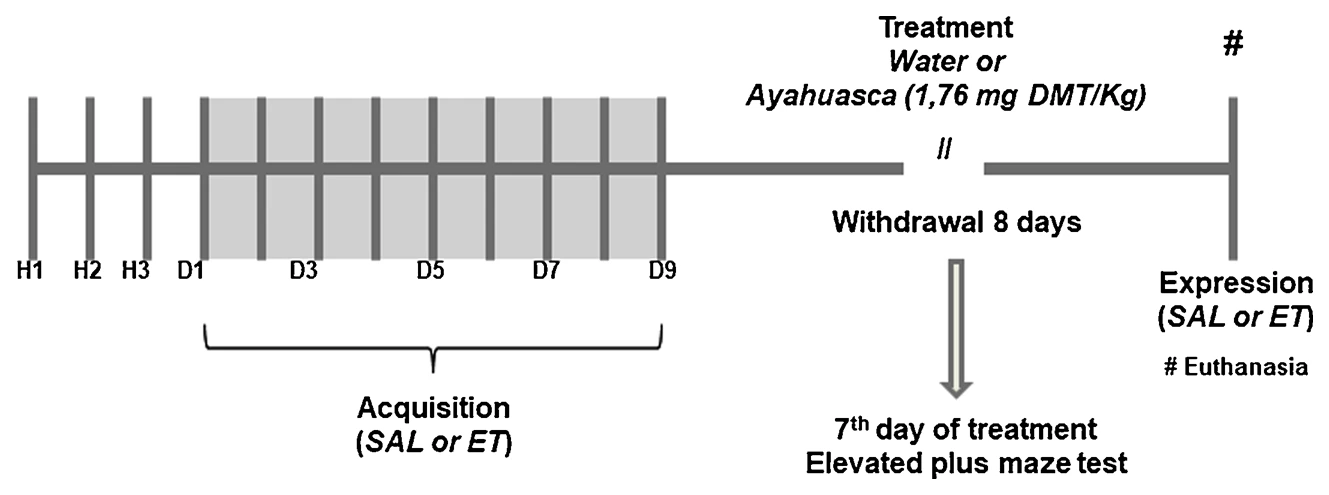
Male Swiss mice received repeated intermittent ethanol injections (2.2 g/kg i.p.) to establish locomotor sensitization. Next, mice received oral ayahuasca (1.76 mg DMT/kg/day) or water for 8 consecutive days. Assays included ethanol challenge locomotion (D18), withdrawal-induced anxiety in the EPM, and Western blot quantification of 5-HT (1A, 2A), dopamine (D1, D2), and dynorphin/prodynorphin peptides in striatum and hippocampus.
Key Findings and Evidence
- Attenuation of sensitization expression: subchronic ayahuasca pre-treatment significantly blocked ethanol challenge-induced hyperlocomotion on day 18 (p < 0.05).
- Anxiolytic profile in withdrawal: ayahuasca-treated mice exhibited marked increases in open-arm exploratory time during acute alcohol abstinence.
- Prevention of hippocampal adaptations: ayahuasca prevented 5-HT1a receptor downregulation and normalized prodynorphin expression in hippocampus (p < 0.05).
- Controlled pharmacokinetics: blood alcohol concentrations determined by GC-FID were identical across groups, ruling out peripheral metabolic interference.
Regulatory Implications and Practical Impact
Provides novel mechanistic evidence that botanical ayahuasca constituents modulate central serotonergic and dynorphinergic pathways, supporting translational research into alcohol use disorder therapeutics.